← All Posts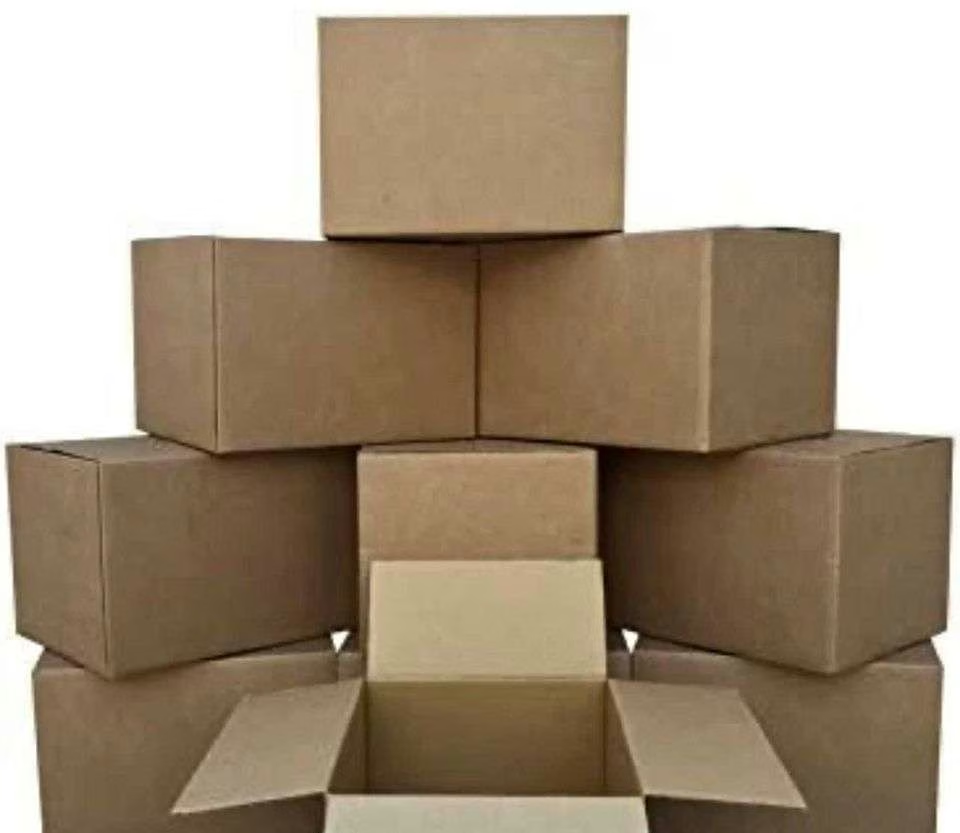
Cardboard Boxes
Most Common Types of Cardboard Boxes Used for Shipping
Dec 19, 2022
Corrugated cardboard is the top material for shipping containers. It’s strong yet light, provides excellent cushioning, and is easy to recycle. It has an inner fluted layer between two flat linerboards. This type of packaging makes up about 95 percent of products shipped in North America. It comes in single-wall, double-wall, and triple-wall options to meet various load needs.
Slotted Container Styles
Regular Slotted Container (RSC)
RSC boxes are everywhere. They are the standard shipping container we all know. Four equal flaps fold together, with the outer ones meeting dead center when closed. The design makes sense: saves material while keeping things strong. That’s exactly why I find them used for nearly every general shipping job out there.Half Slotted Container (HSC)
Just like the RSC, the HSC skips one pair of flaps and leaves one end completely open. This design gives you quick access to whatever’s inside. That’s exactly why people love using it for pallets and bulk items.Overlap Slotted Container (OSC)
In the OSC, all flaps are equal in length, but the outer flaps overlap by at least one inch. This overlapping closure boosts seam strength and guards against vibration. It’s especially handy when the box is much longer than it is wide.Full Overlap Slotted Container (FOL)
FOL boxes extend the flaps beyond the box width so they completely overlap when closed. This design adds an extra layer of cardboard to the top and bottom panels. This provides better cushioning and stacking strength for heavy or fragile industrial shipments.Center Special Slotted Container (CSSC)
The CSSC uses inner and outer flaps of differing lengths that converge at the box’s center. It has no gap between the inner flaps. This gives a smooth support surface. It also doubles the corrugated thickness on the top and bottom. So, it’s great for heavy, dense loads.Auto-Lock Bottom Container (ALB)
The ALB, known as the 1-2-3 Bottom, is die-cut. When you fold it, the bottom panels lock into place automatically. This feature speeds up packing operations for medium-weight products without compromising stability.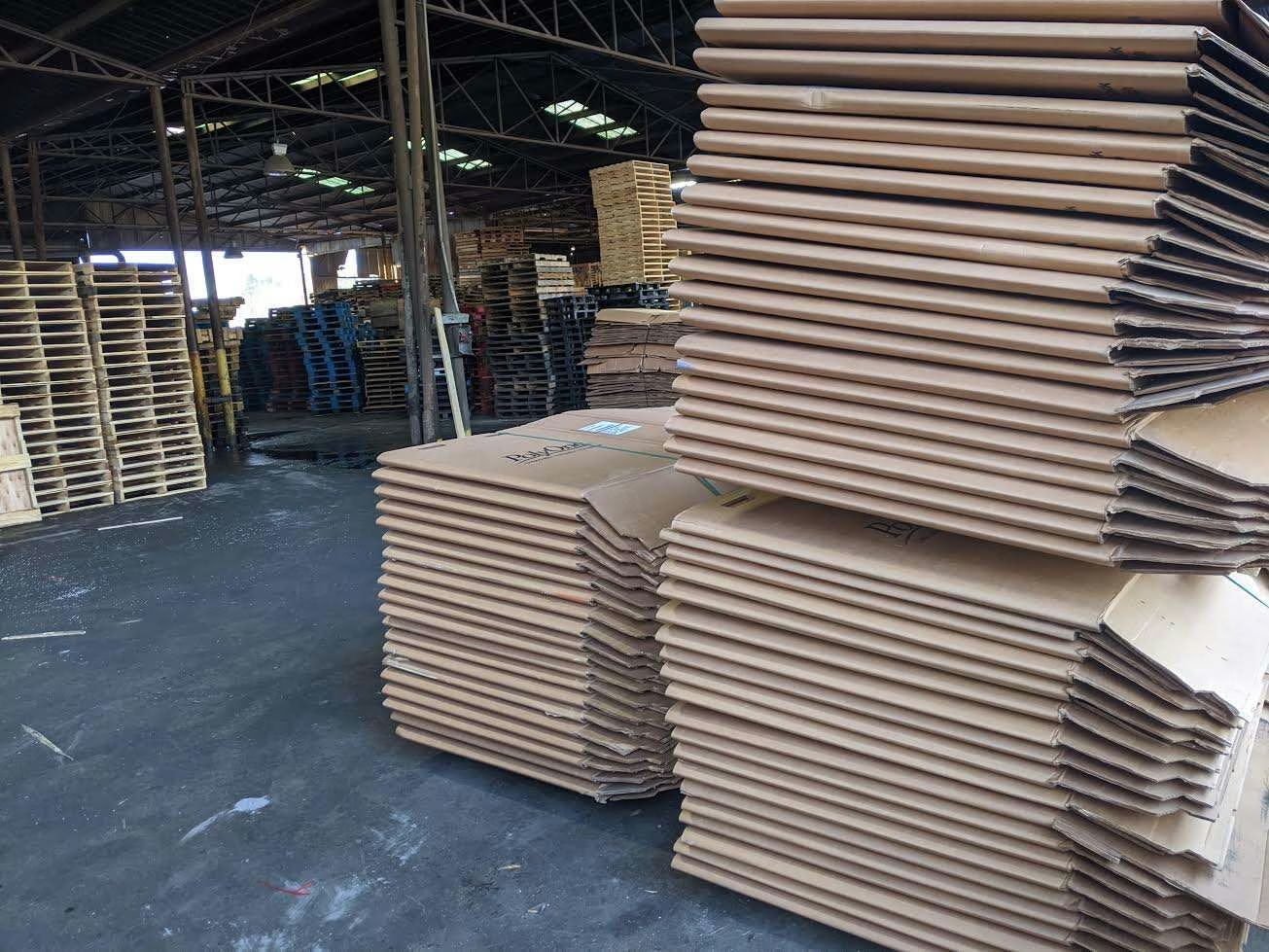
Folder and Tray Styles
Five Panel Folder (FPF)
Also referred to as the Five Panel Wrap or “Smartie Box,” the FPF has five glued panels and no flaps. It protects long or narrow items like posters, hockey sticks, and technical gear. Plus, it has a big printable area for branding.Design Style Tray (DST)
A single-piece tray with glued corners, the DST serves as either a base or a lid. It is often used for flat, heavy items like stone samples or tile palettes. You can also pair it with other containers for modular packaging solutions.One Piece Folder (OPF)
Cut from one sheet to form sidewalls and a flat bottom, the OPF requires no separate lid. The side flaps fold over to secure the contents. This design is a cost-effective choice for documents, books, blueprints, and other printed materials.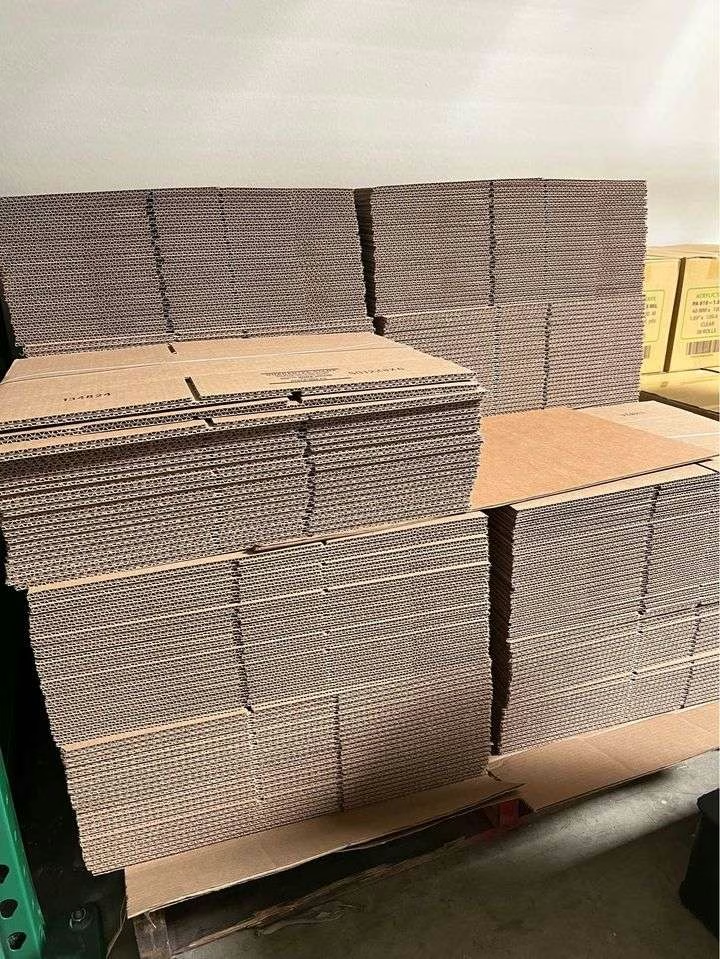
Specialty and Custom Styles
Die-Cut Boxes
Die-cut boxes get made to exact measurements. The cutting dies slice out intricate shapes, windows, and dividers. You see them everywhere in online shipping and store packaging. Getting the right fit and looking good matters most.Telescoping Boxes
Telescoping boxes have two parts: an inner tray and an outer tray that slides over it. They change height to fit different item sizes. They work well for shipping pipes, machine parts, and long or irregular items.