← All Posts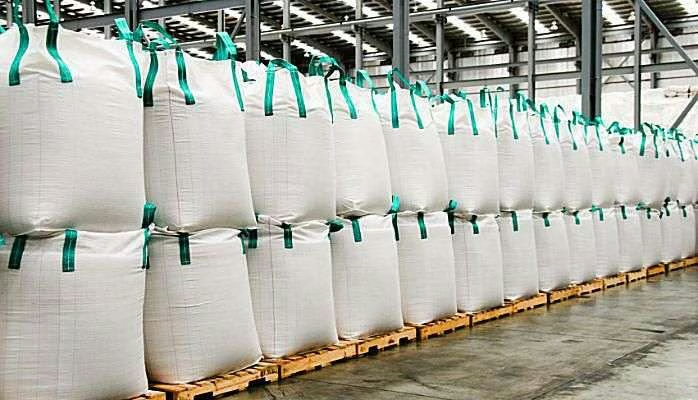
Tips
Should my Company use Gaylord Boxes vs. Bulk Bags (FIBCs)
Oct 22, 2022
What Are Gaylord Boxes?
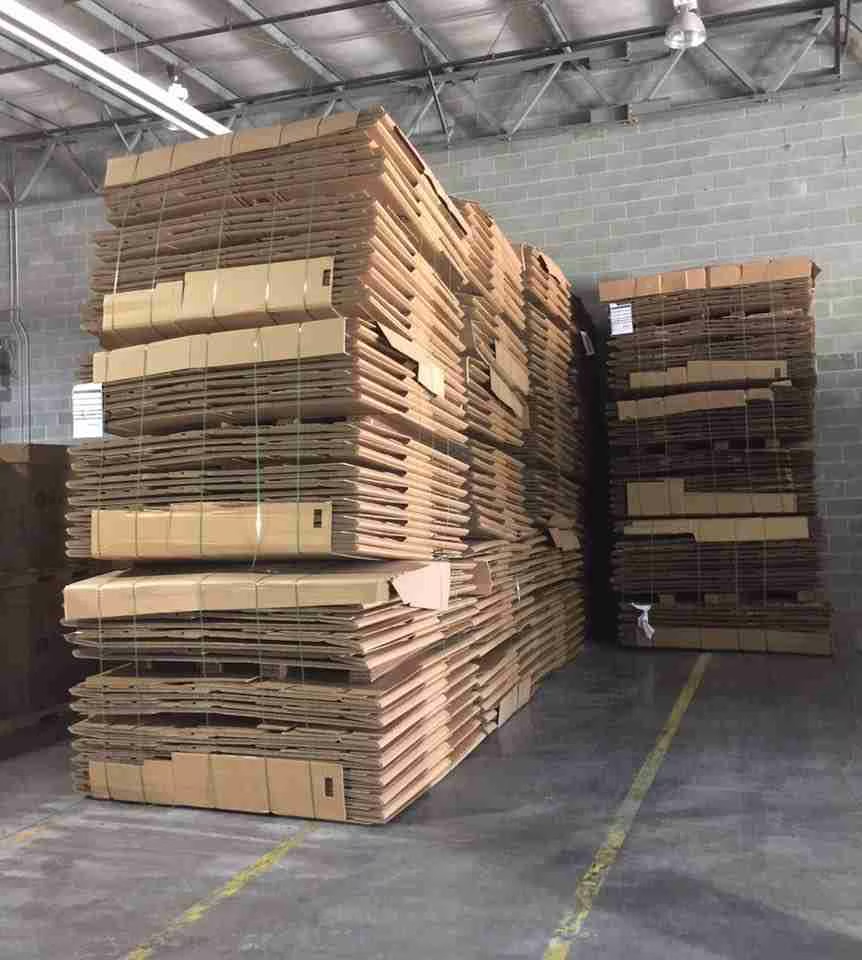
When someone refers to Gaylord boxes, they mean those big corrugated containers seen in many warehouses. The name may seem odd, but these items have many other names. They are also called bulk boxes, pallet boxes, skid boxes, or octabins. What makes them useful is their size and design. They fit perfectly on a pallet. They can handle heavy weight and big volumes for shipping and storage. Most are made from double or triple-wall corrugated fiberboard. They also have a solid pallet base below. The construction is clever. It has steel-reinforced corners that prevent the sides from bulging when heavily loaded. Some come with their own covers. Others have inner liners that depend on the contents. These boxes show up everywhere because they work for so many different things. Loose parts, small containers that need to be grouped, powders, and liquids are all part of this range. It serves various industries, from food processing plants to electronics manufacturers. Pretty much any industry that needs to move bulk quantities around has found a use for them.
What Are Bulk Bags (FIBCs)?
A Flexible Intermediate Bulk Container (FIBC) is known as a bulk bag, super sack, or big bag. It’s made from woven polypropylene fabric. FIBCs are used to hold and transport dry, flowable items like sand, fertilizer, and plastic granules. Standard FIBCs are about 45–48 inches wide and 100–200 cm tall. They usually hold around 1,000 kg (2,200 lb). Some can carry up to 2 tonnes or more and have volumes reaching 3 m³. Each bag weighs only 5–7 lb when empty, folds flat for storage, and is lifted via one, two, or four corner loops. Discharge is performed through bottom spouts or by manual removal of a fabric panel.Comparison of Key Characteristics
Construction and Materials Gaylord boxes use triple-wall corrugated cardboard for their construction. This type of cardboard is tough and can handle regular use well. The downside is they’re often one-time use, so heavy items may need extra support. FIBCs use a unique method. They are made from woven polypropylene, which can be coated or left plain. The material keeps its form. It is light yet tough, making it great for repeated use. Capacity and Weight Limits Most standard Gaylord boxes can hold 800 to 2,000 pounds. This depends on their wall thickness and size. You can find heavy-duty versions when needed. FIBCs can handle 1,000 to 2,750 pounds of powdered or granular materials. This makes them ideal for heavy loads. Handling and Logistics Gaylords fit standard pallet systems. Forklifts move them easily. To unload, you can tip or scoop out the contents. Bulk bags lift easily thanks to their corner loops. You can use forklifts or cranes for this. They empty through bottom spouts. The FIBC setup makes filling and emptying much more straightforward. Empty Footprint and Storage Here’s where things get interesting. Empty Gaylord boxes take up full pallet space. This wastes room in trailers or warehouse racks on return trips. FIBCs collapse down to under 2 inches thick when empty - a huge space saver for storage and transport. Cost Analysis New Gaylord boxes run $25 to $60 each, varying by size and wall construction. Used or reconditioned ones drop to $4-$10. Basic bulk bags usually start at $5 to $6. But if you want specialty bags with liners, anti-static fabric, or custom printing, the price can go over $100. FIBCs cost more at first, but you can reuse them. This often means lower costs per pound in the long run. Environmental and Sustainability Considerations You can recycle Gaylord boxes, and you might reuse them too. But corrugated cardboard is mostly single-use and often too bulky for recycling programs. FIBCs fold flat, clean up for multiple uses, and recycle at end-of-life. This approach cuts waste and reduces transport emissions significantly.
Use Case Scenarios
Gaylord boxes are ideal for handling irregular items and mixed small containers. They are also perfect when you need strong containment for one-time use. Bulk bags are perfect for free-flowing powders, granules, and heavy materials. They allow for easy reuse, cut down on return logistics, and support bottom-spout discharge automation.Decision Factors and Recommendations
Choosing between Gaylord boxes and bulk bags comes down to a few key things:- How your product flows and handles moisture
- What equipment you’ve got for moving stuff around
- Whether you need to send containers back
- Environmental targets you’re trying to hit
- The real total cost when everything’s factored in