← All Posts
Gaylord Boxes · Guides
Buyer’s Guide to Gaylord Boxes: Shapes, Strengths & Uses
Mar 13, 2025
Gaylord boxes are tough, large containers. They play a key role in many industries for shipping, storing, and moving big loads of materials. This guide reviews the shapes, strength ratings, and uses of Gaylord boxes. It’s designed to help you make the best choices for your business.
What Are Gaylord Boxes?
Gaylord boxes are big, pallet-sized cardboard containers. They are meant for bulk storage and shipping. The Gaylord Container Corporation made them popular in the 1980s. These tough boxes generally rest on standard pallets. They hold a lot of weight, so they’re perfect for transporting loose parts and agricultural goods. The term “Gaylord” is now used for many large bulk containers. Yet, it truly describes corrugated bulk boxes. These containers go by many names. You might hear them called bulk bins, pallet boxes, skid boxes, bulk cargo containers, or octabins.Shapes and Designs
Gaylord boxes have three main shapes. Each shape has its own benefits based on what you need.Rectangular (REC)
Rectangular Gaylord boxes feature four sides and are the most common shape. Their key advantages include:- Better shape retention during handling and transport
- Easier to fill and empty for most users
- Simpler setup and assembly
- More efficient use of space in standard shipping configurations
Octagonal (OCT)
Octagonal Gaylord boxes, also called octobins, have eight sides and offer unique benefits:- Higher strength at the corners due to weight distribution across more points
- More even weight distribution throughout the container
- Greater resistance to collapsing under pressure
- Better suited for high-volume, high-weight shipments and vertical stacking
High Performance Tote (HPT)
High Performance Totes are specialized rectangular Gaylord boxes with enhanced features:- Available in four-to-six wall construction
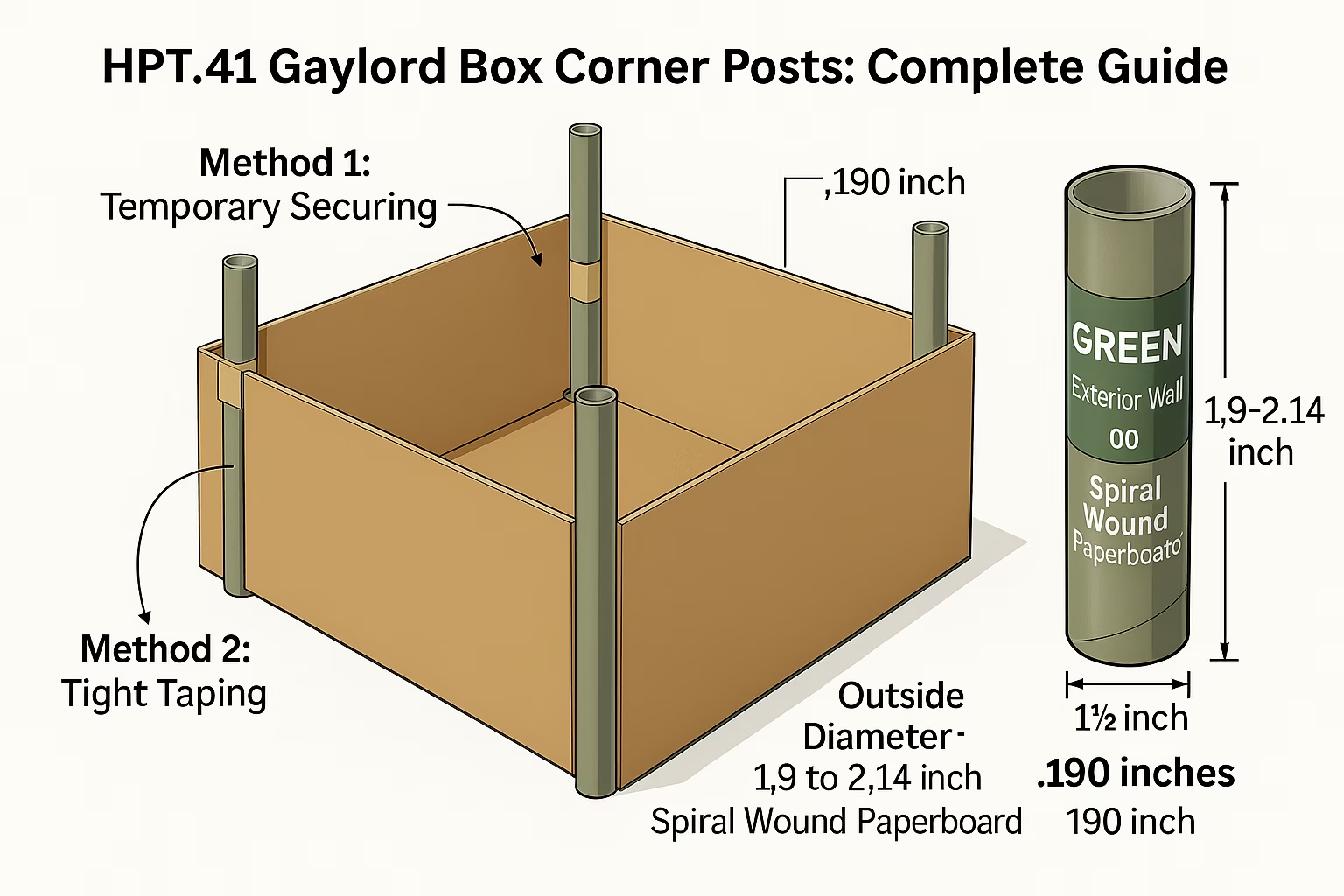
- Optional corner posts for additional support
- Designed for multiple uses
- Can be stacked up to six high in freezer facilities
- Include both top and bottom flaps
Strength Ratings and Wall Construction
The strength of a Gaylord box depends on the way its walls are made and the quality of the materials. Knowing these ratings is key to choosing the right box for your load needs.Wall Construction Types
Gaylord boxes are sorted by how many corrugated layers, or “walls,” they have:- Single-Wall:
- One layer of corrugated cardboard
- Weight capacity: 65-95 lbs
- Best for lightweight items, clothing, soft goods, and recyclables
- Most economical option
- Double-Wall:
- Two layers of corrugated material
- Weight capacity: 95-120 lbs
- Suitable for medium-weight applications
- Good balance between cost and durability
- Triple-Wall:
- Three layers of corrugated material
- Weight capacity: 120-280 lbs (up to 300 lbs with premium grades)
- Used for heavier industrial applications
- Provides significant rigidity and stacking strength
- Quadruple-Wall (Four-Wall):
- Four layers of corrugated material
- Weight capacity: 2,000-2,500 lbs
- Often features reinforced pallet bottoms
- Industrial-grade container for heavy loads
- Five-Wall:
- Five layers of corrugated material
- Weight capacity: 4,000-5,000 lbs
- Maximum strength and durability
- Highly resistant to abuse and rough handling
- Often includes reinforced pallet bottoms
ECT Ratings
Edge Crush Test (ECT) ratings show how strong corrugated material is when stacked. They measure strength in pounds per linear inch along the load-bearing edge. This rating is particularly important for boxes that will be stacked or palletized:- 32 ECT: Standard strength, can hold loads up to 65 lbs
- 48 ECT: Higher strength rating for more demanding applications
Standard Sizes
Gaylord boxes come in many sizes, but a few standard dimensions are most common:Most Common Sizes
- 48” x 40” x 36”: The industry standard size, perfectly matching standard pallets. These boxes can be double-stacked in trucks when full, with 500-550 fitting on a single trailer.
- 40” x 40” x 40”: This square option has a weight capacity like the standard size. It’s also offered in rectangular and octagonal shapes.
- 36” x 36” x 36”: Smaller cubic size for lighter applications or space constraints.
Additional Size Variations
- 48” x 40” x 24”: Shorter version of the standard size
- 48” x 40” x 48”: Extended height version for increased volume
- 48” x 48” x 48”: Larger square configuration for maximum capacity
- 40” x 30” x 30”: Compact size for specific space constraints
Bottom and Top Options
Gaylord boxes come with various bottom and top configurations to suit different applications:Bottom Types
- Regular Slotted Container (RSC): Features flaps that meet in the middle of the bottom.
- Half Slotted Container (HSC): Has flaps on the bottom only, with an open top.
- Tray Bottom: A separate base piece that provides additional support.
- Partial Bottom: Designed for specific applications where a full bottom isn’t necessary.
- Mixed Bottom:/strong>: Combines different bottom styles for specialized applications.
Top Closure Options
- Drop-In (DI) Lid: A separate lid that sits on top of the box.
- Flap Top: Similar to traditional cardboard boxes with flaps that fold to close the top.
- Overlapping Flaps: Provides better sealing and protection for contents.
- Self-Closing Flaps: Designed to close naturally, providing a barrier from external elements.
Applications and Industries
Gaylord boxes serve numerous industries due to their versatility, durability, and cost-effectiveness:Food Processing
- Transport and storage of bulk ingredients (grains, powders, liquids)
- Shipping produce and agricultural products
- Storage of food-grade materials
- Temperature-controlled shipping with specialized coatings
Manufacturing
- Storage of raw materials and components
- Shipping finished products
- Organizing inventory in warehouses
- Consolidating multiple shipments
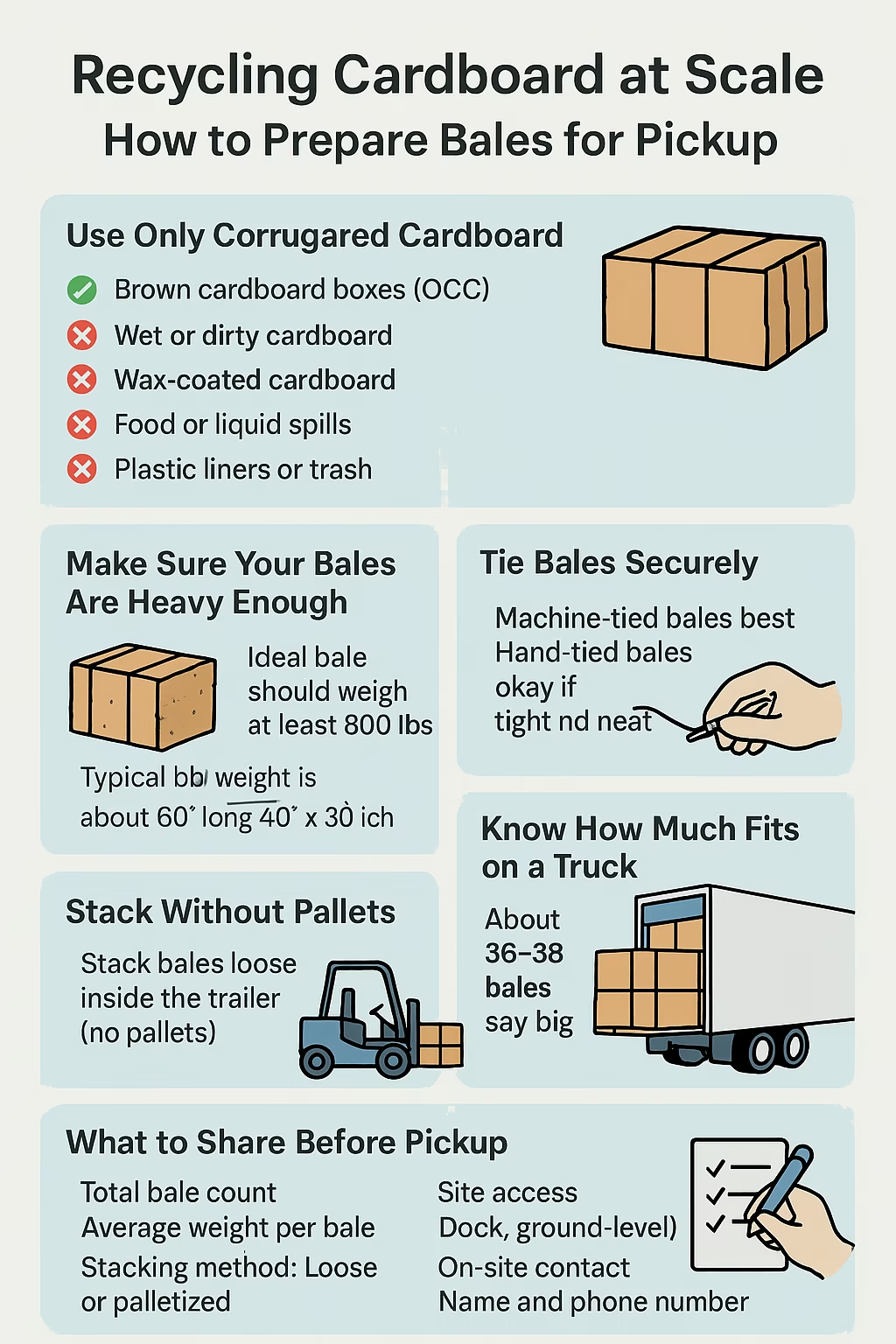
Recycling and Waste Management
- Collection of recyclable materials (paper, plastic, metal)
- E-waste collection and transportation
- Hazardous waste containment (with proper certification)
- Compost collection
Retail and Distribution
- Bulk shipping of merchandise
- Store displays for bulk items
- Returns processing
- Inventory management
Agriculture
- Harvesting and transporting produce
- Storing agricultural supplies
- Shipping bulk agricultural products
- Collection of agricultural plastics for recycling
Charity and Donation Centers
- Collection of donated items
- Storage between distribution
- Organizing donations by category
- Managing seasonal donation drives
Handling and Storage Guidelines
Handling and storing Gaylord boxes the right way ensures safety, boosts their lifespan, and protects what’s inside.Stacking Guidelines
- Follow workplace standards for maximum stacking height
- Test stack stability before adding additional layers
- Use additional restraints such as safety straps or netting for high stacks
- Consider weight distribution when stacking multiple boxes
- Place heavier items at the bottom of stacks
Equipment Recommendations
- Use forklifts or pallet jacks for moving loaded Gaylord boxes
- Consider specialized equipment like Gaylord box dumpers for emptying contents efficiently
- Box dumpers can lift and empty boxes to reduce operator fatigue
- Ensure proper ceiling clearance (130”-150”) when using box dumpers
Assembly Instructions
- Unfold the flattened box into a rectangular shape
- Fold two bottom flaps over the box opening until they meet in the middle
- Fold the other two flaps until they meet in the middle
- Secure with packing tape down the middle of the flaps
- Center the box on a pallet
- For octagonal boxes, ensure all numbered flaps are properly positioned in sequence
Cost Considerations
The cost of Gaylord boxes varies based on several factors:New Gaylord Boxes
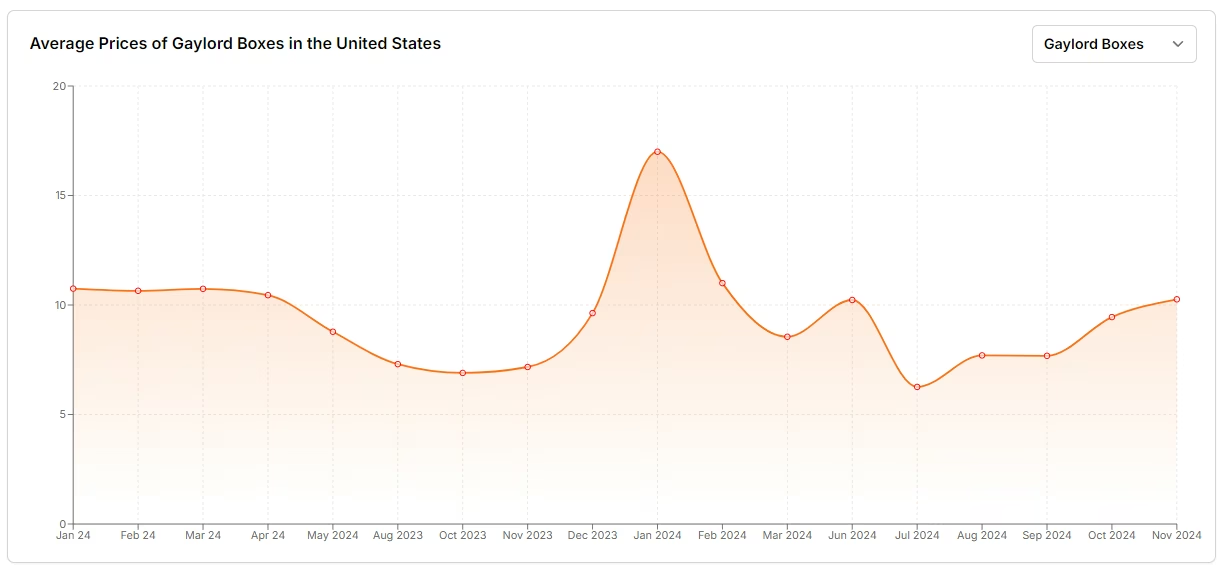
- Single-use new Gaylord boxes: $25-$60 per box for common sizes
- Price varies by wall construction (2-wall, 3-wall, 4-wall, 5-wall)
- Standard 48” x 40” x 36” double-wall: $27-$31 depending on quantity
- Premium 48” x 40” x 48” boxes: $46-$53 depending on quantity
- Economy 36” x 36” x 36” single-wall: Around $11 per box
Used Gaylord Boxes
- Used or reconditioned boxes: $4-$10 per box
- Offer significant cost savings while maintaining structural integrity
- Ideal for single-use applications or internal storage
- May have minor cosmetic wear but remain functionally sound
Quantity Discounts
- Bundle discounts: Prices decrease with larger orders
- Full truckload orders (1,000+ boxes): Significant price reductions
- Example: 48” x 40” x 36” single-wall bottoms cost $15 each for 1-9 bundles, dropping to $13.50 for 40+ bundles
Sustainability and Environmental Impact
Gaylord boxes offer several environmental advantages:Recyclability
- 100% recyclable with other corrugated materials
- Can be processed into raw materials for manufacturing new products
- Reduces demand for virgin materials
- Supports circular economy principles
Reusability
- Many Gaylord boxes can be reused multiple times
- Used boxes often provide the same stability as new ones
- Reusing extends the life cycle and reduces waste
- Particularly valuable for internal operations
Eco-Friendly Options
- Water-resistant Ecoboard Gaylord boxes made with recycled water bottles
- One truckload of ecoboard Gaylord boxes diverts 11,000 water bottles from landfills
- Moisture-resistant coatings available for extended durability
- Recyclable even with specialized coatings
Gaylord Boxes vs. Alternative Bulk Containers
It’s important to understand how Gaylord boxes differ from other bulk containers. This knowledge can help you choose what’s best for your needs.Gaylord Boxes vs. FIBC Bulk Bags
Flexible Intermediate Bulk Containers (FIBCs), or bulk bags and super sacks, are a good alternative to Gaylord boxes. Advantages of Gaylord Boxes:- More rigid structure for certain applications
- Better protection for fragile items
- Easier to stack
- Often less expensive for single-use applications
- Better suited for items with sharp edges
- Lighter weight (typically 5-7 lbs vs. 30+ lbs for Gaylord boxes)
- More flexible for storage when empty
- Better moisture resistance
- Higher weight capacity (up to 4,000 lbs)
- More suitable for powders and granular materials
Gaylord Boxes vs. Plastic Bulk Containers
Reusable plastic bulk containers offer another alternative: Advantages of Gaylord Boxes:- Lower initial cost
- Recyclable at end of life
- Lighter weight when empty
- Customizable sizes
- Disposable for one-way shipping
- Longer lifespan (50+ trips vs. 1-5 for Gaylord boxes)
- Better moisture resistance
- More durable in harsh environments
- Higher stacking strength
- Better for closed-loop supply chains
Specialized Gaylord Boxes
Several specialized types of Gaylord boxes are available for specific applications:Water-Resistant Gaylord Boxes
- Made from corrugated cardboard with plastic coating derived from recycled water bottles
- Manufactured to withstand exposure to elements
- Resists moisture, most chemicals, and UV rays
- Easy to clean and wipe down
- Ideal for outdoor storage or humid environments
UN-Certified Hazardous Waste Gaylord Boxes
- Meets CFR 49 178.601 B requirements
- Certified for Packing Group I, II, & III hazardous products
- Not to be used for materials containing free liquids
- Typically includes a 6-mil poly liner
- Constructed of heavy-duty reinforced triple wall corrugated materials
- Completely incinerable
- Approved for up to 2,000 pounds of hazardous materials