← All PostsGaylord Boxes · Guides
Guide to HPT 41 Gaylord Box Corner Posts
Apr 25, 2025
HPT 41 Gaylord box corner posts are strong supports for large shipping containers. These posts strengthen the bulk packaging systems used in many industries. They help in food processing, manufacturing, automotive, and electronics.
Corner posts are a must-have for safe bulk storage and transport. Companies depend on them to prevent container failure during shipping and storage operations. Large containers require proper support. If they don’t have it, they may collapse or change shape under heavy loads.
Most bulk material operations now use these posts in their packaging systems. The design focuses on stress points where containers often fail. This includes the corners where weight and handling forces gather.
Understanding HPT 41 Container Systems
HPT 41 containers are basically heavy-duty tote bins built for serious industrial use. The “41” comes from the height - these things measure 46×38×41 inches and give you about 40.75 cubic feet of space to work with. Weighing 52.5 pounds when empty, they’re not light. But they’re tough and built to take a beating.
What makes these containers special is the corner pocket system. Each corner has slots for reinforcement posts. You can select from 3¼×4¾ inches or 5¼×2¾ inches, depending on your setup. Without posts, the bins can handle about 15,900 pounds of compression. Add the corner posts and that number jumps way up.
The construction uses laminated walls held together with WRAD adhesive. You get several layers. This includes 71 ECT bin walls, liners, and octagonal pieces. All are bonded into one solid unit. The system works well because the corner pockets distribute weight evenly when you stack items. Ideal for warehouses or manufacturing, these containers are built to last. They won’t break down under heavy loads or frequent handling.
Technical Specifications and Engineering Details
Spiral Wound Corner Post Construction
HPT 41 corner posts get their strength from spiral wound technology. Many layers of paperboard soak in glue and then wind in a spiral around a mandrel. Spiral tubes have better column strength than straight-layered tubes. This is because the spiral spreads loads more evenly.
Two wall thicknesses work for different needs. The 0.190 wall balances strength with cost. The 0.400 wall handles tougher jobs. They both use the spiral method. But they use different amounts of paperboard to reach their strength goals.
The spiral design helps these posts be strong. It’s a clever way to use paper while staying on budget.
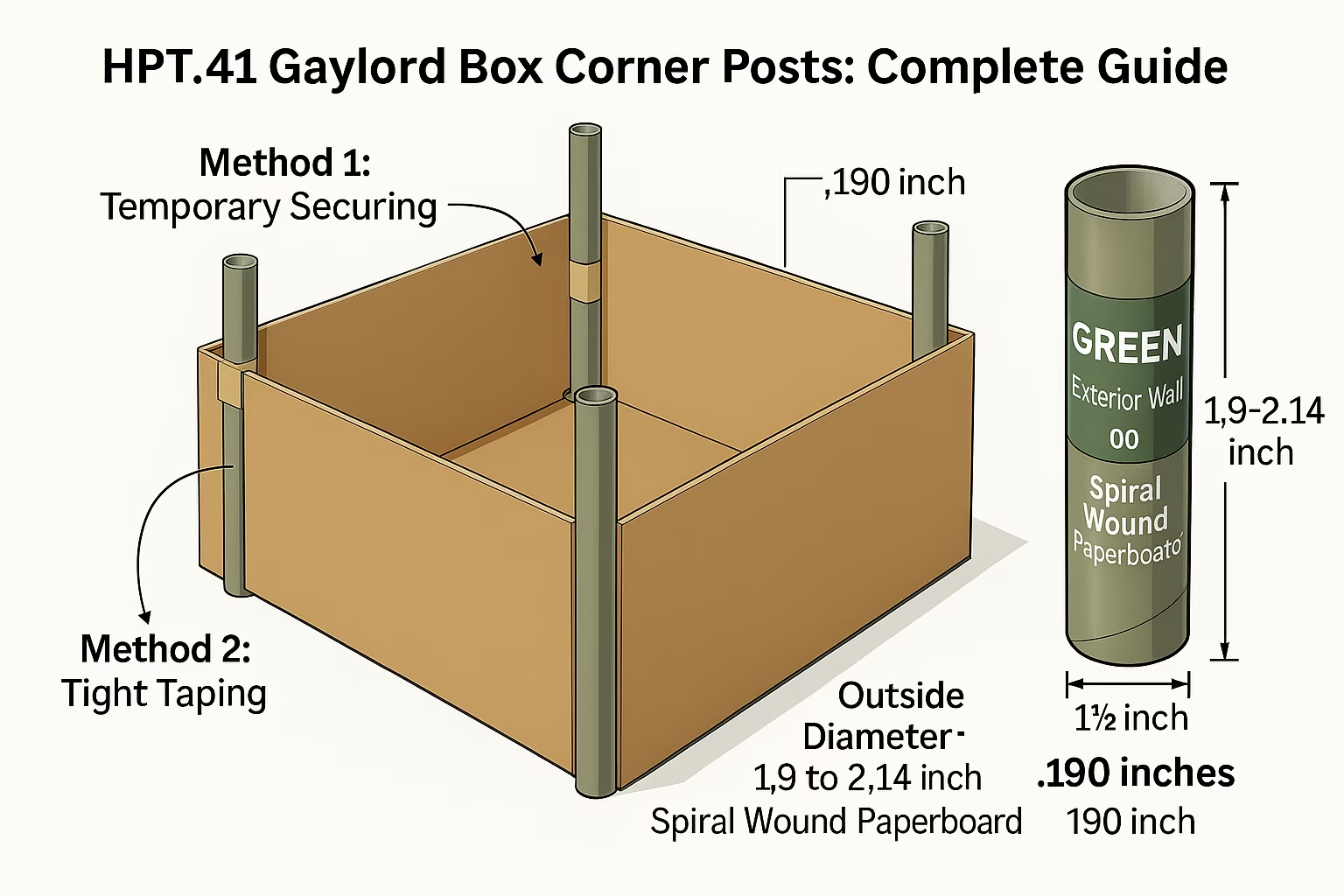
The 0.190 wall spiral wound corner posts come in two main sizes. Standard length runs 41 5/16 inches, while shorter applications get 34 11/16 inch posts. The outside diameter ranges from 1.9 to 2.14 inches. The inside diameter remains steady at 1½ inch for easy handling.
Weight breaks down to 1.149 pounds for the full-length posts and 0.952 pounds for shorter ones. That works out to about 0.028 pounds per inch, which makes load planning straightforward. Each post handles 900 pounds of compression when properly cured and conditioned.
Shipping happens in bulk. Standard totes hold 500 pieces and weigh 679 pounds total with packaging. Full truckloads carry 30,000 pieces in 60 totes. This is the scale most industrial operations use for these reinforcement systems.
Installation Methodologies and Best Practices
Proper Installation Procedures
Installing HPT 41 Corner Posts
Getting these corner posts right makes all the difference for your Gaylord totes. Start by sliding each post into its corner pocket—they need to sit flush and straight from the get-go.
Method 1: Tape and Load
Drop the posts into all four corners, then grab some good tape and loosely secure two opposite corners. This keeps everything in place while loading your product. The posts stay put, alignment holds, and you can still make tweaks before sealing up. Just watch that the posts stay vertical throughout loading—crooked posts can’t handle the weight properly.
Method 2: Firm and Fast
This one works better when you’re moving fast and know what you’re doing. Tape those two loose corners firmly to the bin right away, but keep a sharp eye on alignment. No second chances here, so the posts better be positioned correctly from the start.
Both methods work, but always double-check post position before closing the tote. That final look saves headaches during transport and storage.
Safety Considerations and Quality Control
Corner post safety goes way beyond just handling them carefully during installation. It’s important to condition and cure these items beforehand. This helps meet their compression ratings. Skip this step and you’re looking at early failures that could tank both safety and budgets.
Before installing anything, visual checks are non-negotiable. Any signs of crushing, water damage, or manufacturing flaws mean that post gets tossed. The dimensions must align with the container’s corner pockets. If they don’t match, weak points can form, which defeats the whole purpose.
Storage matters more than most people realize. Paper-based corner posts soak up moisture like crazy, which kills their strength. Keep them somewhere dry with decent climate control, away from any water sources. Rotating stock prevents the older stuff from sitting around too long and degrading. Basic inventory management saves headaches later.
Applications and Industry Use Cases
Heavy-Duty Industrial Applications
HPT 41 corner posts are widely used in heavy-duty industrial settings. They work well where regular packaging solutions fall short. The automotive industry is a major user of these reinforcement systems. They use them to ship heavy parts like engines, transmissions, and body panels. Corner posts boost stacking strength. This helps car manufacturers make the most of warehouse space. It also keeps valuable parts safe during the supply chain.
Electronics and appliance makers now use HPT 41 corner post systems. These systems protect sensitive and heavy equipment during shipping. Corner posts help stop crushing damage that might ruin costly electronic parts. Plus, the system can be reused, which supports sustainability goals in the electronics industry. Being able to stack reinforced containers four to five high in freezers is a major plus. It’s particularly helpful for manufacturers of temperature-sensitive electronic parts.
The chemical and resin industries gain a lot from stronger structural integrity thanks to corner post reinforcement. Chemical products often need sturdy containment systems. These systems must endure the challenges of moving and storing large quantities. HPT 41 containers have a strong laminated design and reinforced corners. This makes them sturdy and suitable for food-grade use when required.
Food Industry and Agricultural Applications
Food processors use HPT 41 corner post systems. These systems help with bulk frozen vegetables, seafood, and heavy products. The systems meet food safety requirements while providing solid compression strength. Proper stacking in freezer storage is important. It helps prevent container failures. This stops contamination of products and avoids losses.
Farms use these systems for storing and transporting seeds, grains, and bulk materials. The enhanced stacking capability maximizes storage space while protecting valuable crops. Since the systems are reusable, farms cut costs and reduce environmental impact.
Manufacturing and Quality Assurance Processes
Spiral Wound Manufacturing Technology
Making HPT 41 corner posts starts with good kraft paperboard that gets cut to exact widths. The entire process depends on spiral winding technology. It’s quite complex once you dive into the details.
First, the paperboard strips go through an adhesive bath. This bonding agent is made for industrial packaging. The right amount is crucial, more than you may realize. Too much adhesive messes up the dimensions, too little and the layers won’t hold properly.
Next comes the actual winding. The adhesive-coated paperboard wraps around a mandrel at a specific angle and tension. The spiral pattern makes these corner posts stronger than regular tubes. It’s better at handling stress.
Temperature and humidity control runs through the entire process. Can’t skip this part or quality suffers. After winding, the posts cure to bond the adhesive. Then, controlled drying adjusts the moisture content for storage and performance.
Quality checks happen constantly - compression strength, dimensions, moisture levels. Everything is tested against specs. Consistency is key since these posts protect shipped goods.
The whole operation balances chemistry, physics, and manufacturing precision. Not as simple as it might look from the outside.
Testing HPT 41 corner posts means checking how they perform in real use. Compression testing shows us the real action. We load materials until they break. This helps us know how much stress they can take.
The testing has to be done right though. Posts need proper curing and conditioning first, otherwise the results won’t mean much. There are two main ways to test strength: flat crush and radial crush. Flat crush gives standardized numbers that make it easy to compare different products. Radial crush testing gets closer to what actually happens when these posts face high pressure in the real world.
Both types of testing matter because they tell different parts of the story. Engineers use these results to choose the best corner post specs for their job.
Environmental testing rounds out the picture. Posts are put through different temperatures and humidity levels. This helps us see how they stand up during storage and shipping. Paper products are affected by moisture. This is why testing is vital when posts face different conditions. Temperature cycling tests if adhesives stay solid at the typical temperature ranges in industrial environments.
The validation process makes sure these corner posts perform well when in use.
Economic and Environmental Considerations
Cost-Benefit Analysis and Economic Impact
Corner post systems are worth it if you consider more than just the initial costs. These systems save money by using space better, reducing product damage, and improving operations.
Warehouses can stack containers higher and tighter using corner posts. This helps fit more storage in the same space. That matters in expensive industrial areas where every square foot costs serious money.
Product damage drops significantly too. When containers fail under load, you lose entire shipments. One damaged electronics shipment may cost more than corner posts for lots of containers. The math works out fast.
Workers speed up with reinforced containers. They don’t have to treat each stack with extra care. Less time spent positioning means fewer collapses to clean up. This leads to smoother handling in the warehouse.
The system has a compound effect. When stacking is better, space use improves. This leads to less handling time and lowers labor costs. Meanwhile, fewer damaged products mean fewer insurance claims and customer complaints.
For valuable cargo, such as auto parts or electronics, corner posts are a must. They are not just an option. The benefits they offer far exceed the initial cost. This is true, especially when you consider the operational gains they bring.
Environmental Sustainability and Lifecycle Assessment
These HPT 41 corner posts are pretty solid from an environmental standpoint. They are made from recycled paper. This supports the circular economy while still working well in tough industrial settings.
What’s nice is you can recycle them again when they’re done, so nothing goes to waste. Plus, if you take care of them, you can use the same posts multiple times before needing replacements. That really spreads out any environmental impact.
The carbon footprint beats plastic or metal alternatives by quite a bit. Wood fiber is renewable. It uses much less energy to make than synthetic choices. They’re also lighter than metal posts, so shipping them around creates fewer emissions.
This is very useful in closed-loop systems. Here, the same containers and posts keep going around. The reusability factor really shines there.
Future Developments and Innovation Trends
Advanced Material Technologies
HPT 41 corner post technology keeps improving. New adhesive systems and refined fiber compositions are in the works. These changes lead to better performance and support eco-friendly practices. Water-resistant adhesives help corner posts stay strong in humid places or when moisture is present. These advanced adhesive systems must improve performance but also be eco-friendly and recyclable.
Fiber treatment technologies provide a way to strengthen paperboard raw materials. They do this while ensuring recyclability is not affected. These treatments help bond fibers better. They also boost the strength-to-weight ratio of the final corner posts. Research on bio-based treatments from renewable sources supports sustainability goals. They also improve performance, broadening the use of paper-based reinforcement systems.
Using barrier technologies in corner post construction protects against certain environmental issues. This includes threats like moisture, oils, and chemical exposure. These special coatings can help corner posts endure tough environments. They also keep the core structure working well. When developing these technologies, we must consider how they can be recycled at the end of their life. This way, we can ensure that boosting performance doesn’t hurt environmental benefits.
Automation and Process Optimization
Manufacturing automation has changed how we make corner posts. Machines now apply adhesive much better than people can. There are no more uneven glue spots or weak bonds. Real-time monitoring tracks tension and speed. It catches issues early, so they don’t turn into costly mistakes.
Quality control happens automatically now. Test equipment samples as they come off the line. Run compression tests and flag anything that fails to meet specs. No more waiting until the end to find out something went wrong three hours ago.
Predictive maintenance keeps the whole operation running smooth. Sensors look for wear patterns and drops in performance. They set up repairs before equipment breaks down. This prevents those nightmare scenarios where everything stops because one machine failed.
HPT 41 Gaylord box corner posts represent solid engineering. These spiral wound reinforcements work across industries - automotive, electronics, food processing, agriculture. The design balances strength with cost-effectiveness while staying environmentally responsible through recyclable materials.
The installation process follows clear specifications that ensure reliable performance. When done right, corner post systems provide reliable bulk storage and transportation. Companies can count on them.