← All Posts
Gaylord Boxes
Gaylord Box Sizes and Types
Dec 17, 2022
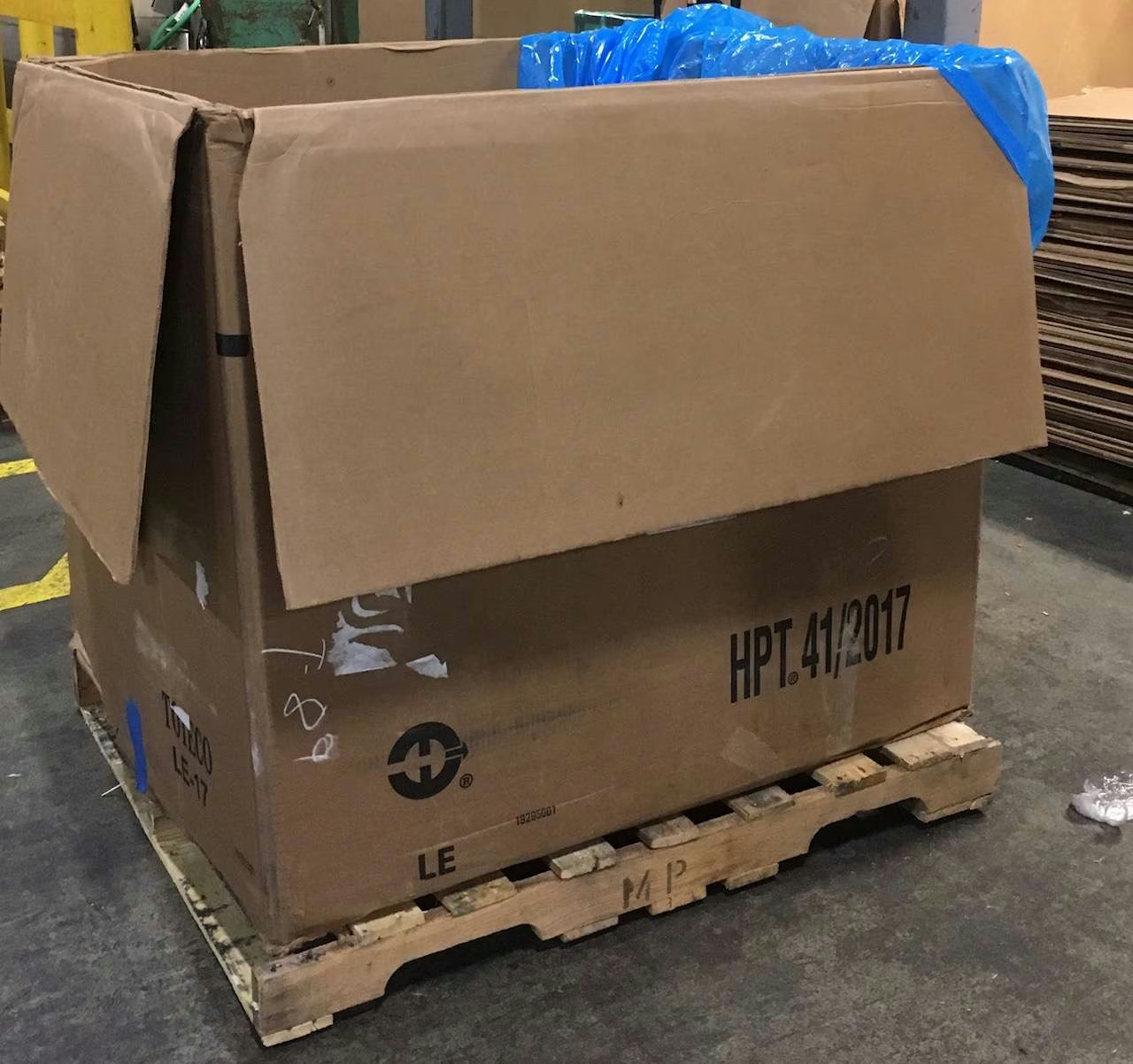
Gaylord boxes are strong, big corrugated containers. They are great for bulk shipping and storage in many industries. Named for the Gaylord Container Company in St. Louis, these boxes are pallet-sized. They began as jumbo boxes but now cover any large bulk container that fits on standard pallets.
Standard Gaylord Box Sizes
48” x 40” x 36” - The Industry Standard
The most common Gaylord box size measures 48 inches in length, 40 inches in width, and 36 inches in height. This standard size is very popular. It fits standard pallets well. This lets trucks double-stack loads efficiently when carrying inventory. These boxes usually have three to five walls. They can hold 500 to 550 units on one trailer. This depends on how the pallets are arranged. The weight capacity for four and five-wall variants is 4,000 to 5,000 pounds. This makes them great for recycling metal, plastic, and electronic waste.40” x 40” x 40” - Square Configuration
The 40” x 40” x 40” Gaylord box has a similar weight and carrying capacity as the standard size. It also has a cubic shape. These boxes often have four or five walls. You can find them in rectangular or octagonal shapes. The square shape is great for material handling tasks that need uniform sizes.Additional Size Variations
Gaylord boxes come in many sizes to meet various needs:- 48” x 40” x 24” - A shorter version of the standard size for lower-height requirements
- 48” x 40” x 48” - Extended height version for increased volume capacity
- 48” x 48” x 48” - Larger square configuration for maximum capacity
- 36” x 36” x 36” - Smaller cubic size for lighter applications
- 40” x 30” x 30” - Compact size for specific space constraints
Types of Gaylord Boxes
Shape Classifications
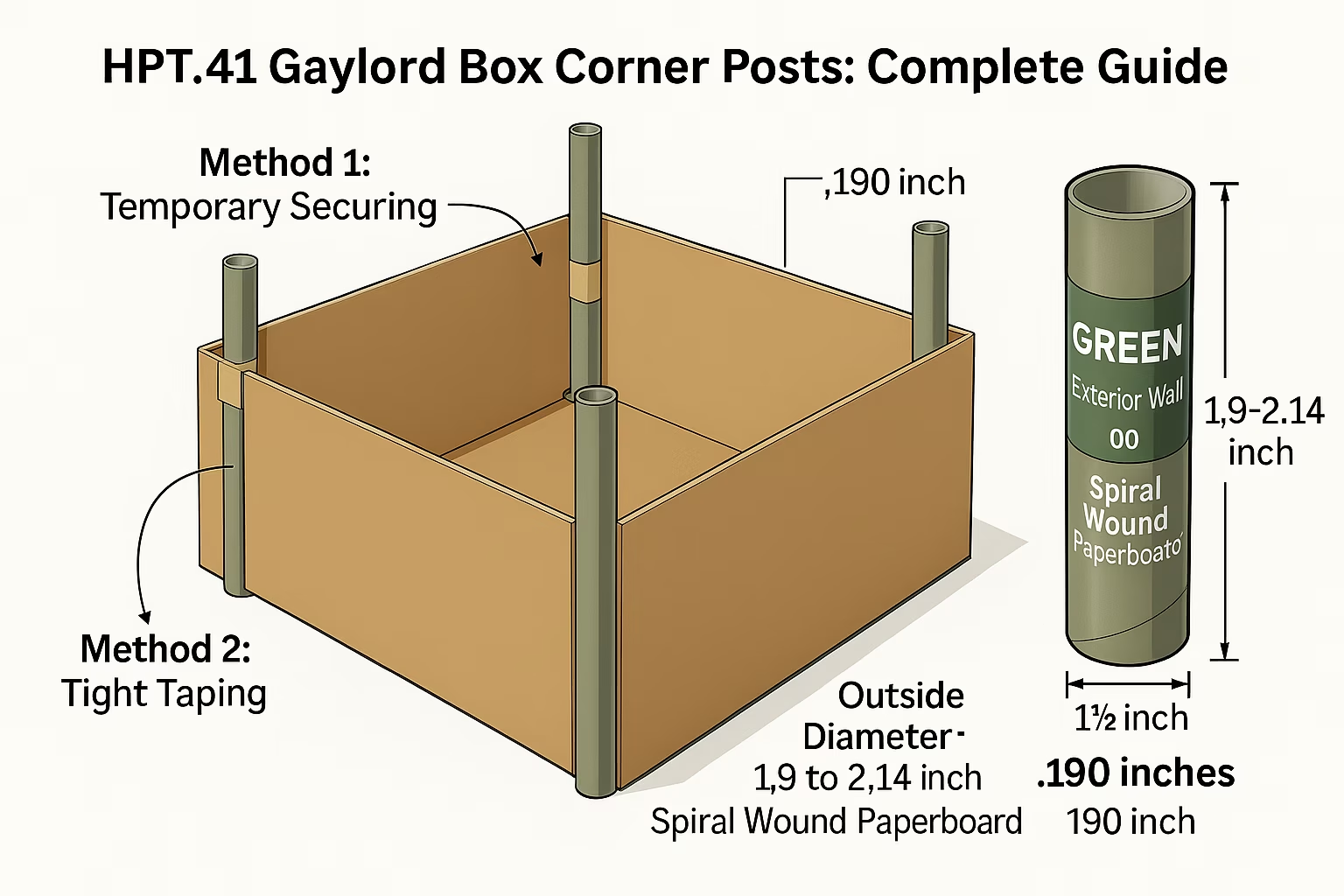
Rectangle (REC) Rectangular Gaylord boxes are the most common type. They have four sides that hold their shape well when being handled. These boxes are easier to fill and dump out than other shapes. This is why they are often the top choice for many tasks. You have several options for tops and bottoms. You can select full flap tops and bottoms, open tops with full flap bottoms, or open tops with drop-in bottoms. Octagon (OCT) Octagonal boxes, or octobins, have eight sides. This shape helps spread weight evenly across the corners. This design makes the corners stronger. It spreads the weight across more corners. They are stronger, but they can be harder to fill and empty than rectangular boxes. High Performance Tote (HPT) HPTs are sturdy boxes. They come in four to six-wall designs. You can also add corner posts for better stacking support. These boxes are made for many uses. They can stack up to six high in freezers. They have top and bottom flaps. They were made for storing frozen vegetables. However, they are also widely used for recycling when they can’t store food anymore.Wall Construction Types
Single-Wall Construction Single-wall Gaylord boxes are the cheapest option. They are made from one layer of corrugated cardboard. They fit well for light tasks such as clothing, soft goods, shredded paper, or recyclables. However, they have limitations with heavy, dense, wet, or sharp-edged materials. These boxes are typically made from 200#/ECT-32 kraft corrugated material. Double-Wall Construction Double-wall boxes have two layers of corrugated cardboard. This design makes them much stronger and more durable. They are made from 275# D.W./ECT-48 kraft corrugated material. This makes them great for heavy uses like scrap metal, e-waste, dense plastics, and granulated products. The double-wall construction offers better protection against bulging and material breakthrough. Triple-Wall Construction Triple-wall Gaylord boxes are the strongest cardboard option. They have three layers of corrugation. These boxes are made with 1100# TW/ECT-90 kraft corrugated material. They can take on heavy loads and demanding tasks with ease. They often have flaps or liners for better containment. This makes them great for fine materials like resins or powders. The maximum load capacity can reach up to 1,500 pounds.Bottom Configuration Types
Full Flap Bottom (RSC - Regular Slotted Container) RSC boxes have flaps on the top and bottom. This design offers full enclosure. These are used to ship valuable goods. They keep items safe from damage and hidden from view. RSC boxes are typically rectangular and can be manufactured from one to six walls thick. Half-Slotted Container (HSC) HSC boxes have flaps only on the bottom with an open top design. If you need to seal them, use a separate lid. They come in rectangular and octagonal shapes. These boxes are popular when using poly liners or separate lids and can be made from one to eight walls thick. Drop-In Bottom Drop-in bottoms have a tray that fits inside the box. This adds extra support. This design is great for heavy materials. It also provides extra strength at the bottom. Tray Bottom Tray bottoms form a strong base that locks in place. This creates a complete bottom structure. These often go hand in hand with sleeve-style walls. They provide strong support for heavy loads.Material Variations
Corrugated Cardboard Gaylord boxes are usually made from corrugated cardboard. This cardboard is often made from kraft paper. This material is strong yet light. It’s friendly to the environment since it can be recycled. Additionally, it provides affordable packaging solutions. Corrugated Plastic Gaylord containers are made from high-density polyethylene (HDPE) and polypropylene. These containers come with a pallet base, a foldable sleeve made of triple-wall polypropylene “honeycomb,” and a lid on top. Plastic versions last over three years, making them very durable. They also resist moisture and chemicals, plus they can be reused. Reusable Plastic Gaylords Advanced plastic Gaylord containers, like the 45” x 48” x 48” model, can hold up to 3,300 pounds. They are also certified for rail transport of flowable materials. These containers collapse and nest with a 3:1 ratio. When loaded, they can stack five high. Plus, they feature locking lids for extra stability.
Applications and Uses
Gaylord boxes are used in many industries. You might be surprised by how often they are relied on. Go to any grocery store in watermelon season. You’ll see containers full of fresh watermelons all around. That’s actually how they earned the nickname “watermelon boxes.” Farmers use them a lot during harvest. They move big loads of fruits and vegetables from the fields to processing plants or markets. The size makes perfect sense when you’re dealing with bulk crops. Manufacturing plants need these boxes. They keep everything in order, from raw materials to finished products and tools. Production facilities must run efficiently. Gaylord boxes help achieve that goal. Plastic compound companies, recycling operations, and parts makers rely on these containers every day. Recycling Operations Recycling centers would struggle without Gaylord boxes. These containers collect and transport paper, plastic, metal, and electronic waste efficiently. They can handle a lot of recyclables before they are processed or sent to recycling facilities. Electronic waste collection centers especially rely on them to safely gather old electronics. Shipping and Logistics Bulk shipping operations center around these containers. Everything from food supplies to heavy industrial equipment gets moved this way. The design is a great match for standard pallets and stacking systems. So, it is vital for logistics operations. Many companies and people rely on them for big moves. They can also be used as temporary storage containers.Strength and Capacity Specifications
Gaylord boxes are strong. We measure their strength with the Edge Crush Test (ECT). This test shows how much force it takes to crush the corrugated material. Common ECT ratings include:- 32 ECT: This strength is good for lighter uses. It usually supports up to 65 pounds.
- 48 ECT: Medium strength for moderate-weight applications
- 90 ECT: High strength for heavy-duty applications
- 155 ECT: This offers maximum strength for tough jobs. It can hold up to 1,500 pounds.