Gaylord Boxes
What is a Gaylord Box
Apr 29, 2022
Used Box Recycling
What is A Gaylord Box?
This style of box gets its name from the Gaylord Container Corp, which was based in St. Louis. Founded in 1986. It was later aquired and no longer exists
So what is a Gaylord?
If your company is inneed a container for moving or the stronger of large amounts of cargo, you may consider using a gaylord box. Ranging in wall thickness with anywhere from 2 to 6 layers of corrugated cardboard. Also known as PLY.
This helps deterime the strength and weight capicity for each box. This helps us know how much product can safely placed inside the bulk bin or how many corrugated pallet boxes are safe to stack during shipping or storage.
What Type of Businesses Use these Bulk Bins?
Any individual or business that needs to transport goods from one pointnt to another can utailize the gaylord box. The majoirty of these containers have either full flap or partial flap bottoms. Depending on what your need is this may be very important.
The most common materials stored in gaylord boxes?
- Plastic Pellets
- Resin
- Produce
- Packaged foods
- Hazmat Material
- granular substances
- Powders
- Liquid
- Scrap Metal
What Is a Gaylord Box?
Definition
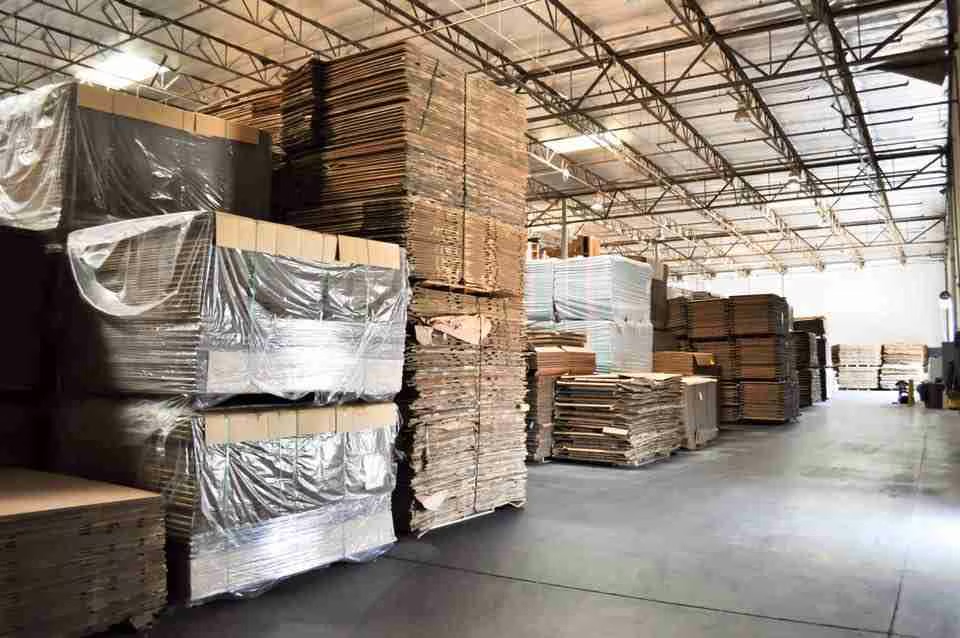
A Gaylord box, sometimes called a bulk box, pallet box, skid box, or octabin, is a big container used for storing and moving bulk or packaged items. These containers are usually made of double- or triple-wall corrugated fiberboard. They sit on a pallet base and often have side flaps or removable panels. This design makes loading and unloading easy.
Origin and Terminology
The name "Gaylord" comes from the Gaylord Container Company in St. Louis. They were the first to make triple-wall corrugated bulk bins in North America. After Crown Zellerbach bought the company in 1955, the term started to mean large corrugated pallet boxes in the U.S. and Canada.
Construction and Types
Materials and Key Features
Gaylord boxes are mainly made of thick corrugated cardboard. But for specialized needs, you can also find them in heavy-duty wood, steel, aluminum, or reusable plastic totes. Key construction features include:
- Corrugated walls (double- or triple-wall) for rigidity and bulge control
- Pallet base (often integral) for forklift and pallet jack compatibility
- Side panels or flaps that fold down to facilitate filling and then secure contents
Shape Varieties
Three principal shapes are offered to accommodate various materials:
- Rectangular (REC) — standard four-sided design
- Octagonal (OCT) — eight-sided for improved discharge characteristics
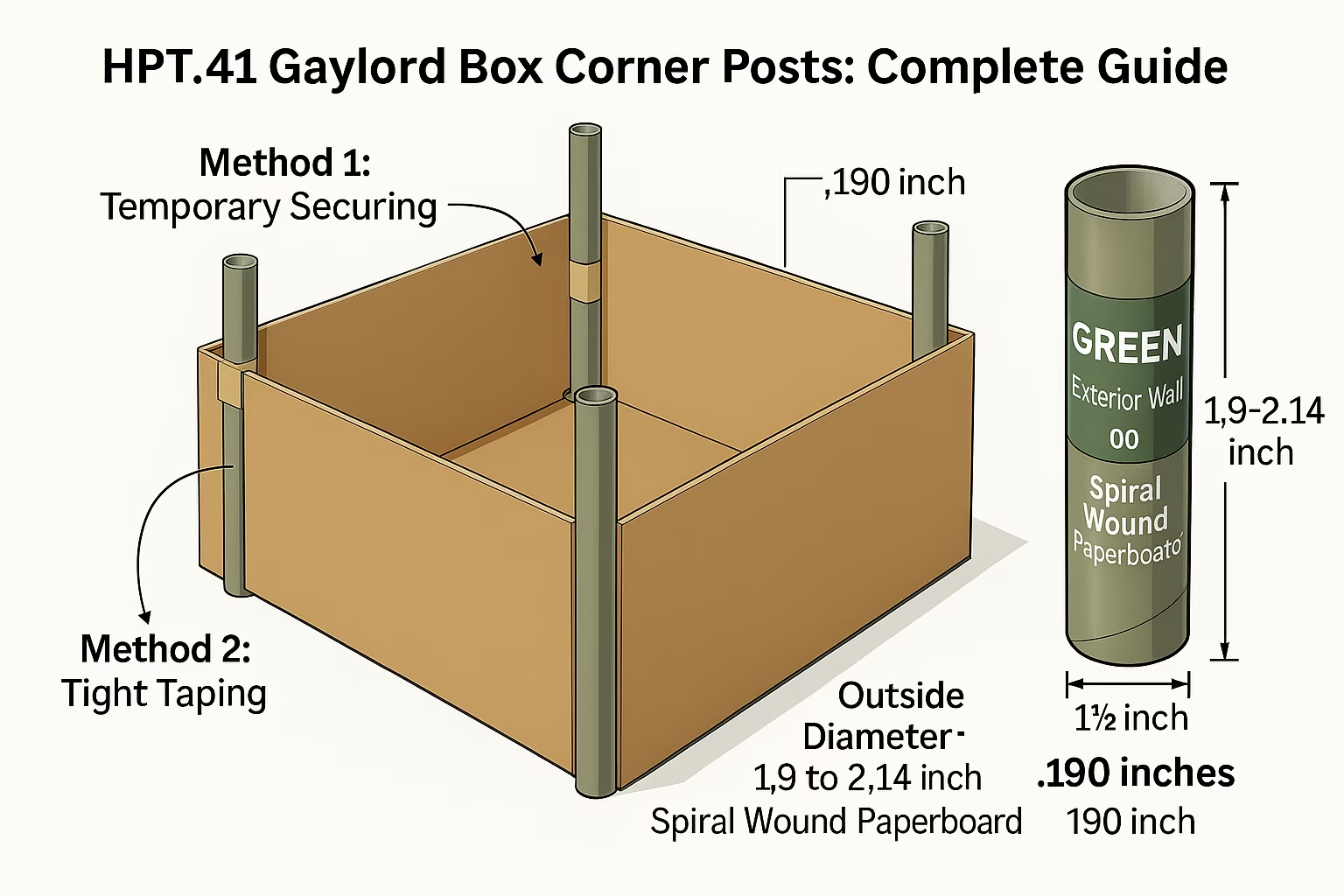
- High Performance Tote (HPT) — reinforced style for heavy or abrasive materials
Standard Sizes and Variations
While custom dimensions are common, standard corrugated Gaylord boxes include:
- 48″ × 40″ × 36″ — the industry standard size fitting on a 48 × 40 in pallet
- 40″ × 40″ × 40″ — square configuration for uniform handling
Other popular variants range from smaller 36 × 36 × 36 in to taller containers like 48 × 40 × 48 in. It also has shorter options, such as 48 × 40 × 24 in, for when lower heights are needed.
Weight Capacity:
- Four- and five-wall boxes can handle between 4,000 and 5,000 lb
- Standard double-wall boxes usually manage 2,000 to 2,200 lb each
Applications and Industries
Gaylord boxes serve a broad spectrum of sectors due to their versatility:
- Food and produce — shipping watermelons, bulk grains, and fresh-cut produce
- Manufacturing and automotive — handling raw materials, work-in-process inventory, and scrap
- Recycling and waste management — collecting paper, plastic, metal, and electronic waste for processing
- Retail and distribution — keeping seasonal items, books, textiles, and loose parts in warehouses and fulfillment centers
They work well with material-handling equipment. Their stackable design helps make pallet racking, cross-docking, and container loading more efficient.
Durability and Sustainability
Gaylord boxes are made from recyclable corrugated fiberboard. They are usually reusable or returnable. For sensitive loads, they can be reinforced with liners or moisture-resistant coatings.
Fewer packaging components mean less waste. This practice supports the "reduce, reuse, recycle" goals in today's supply chains.